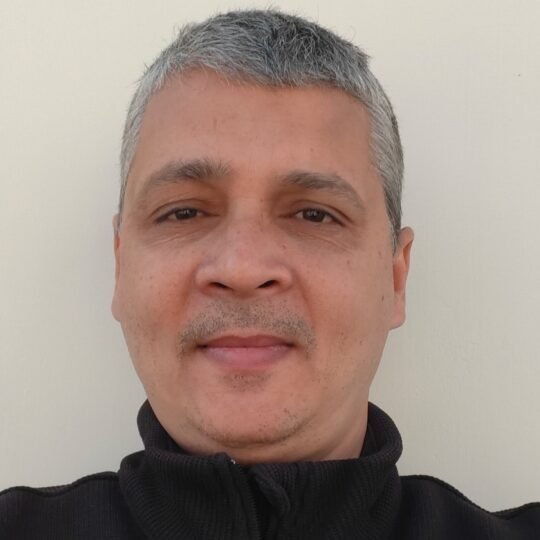
Social Enterprise Day reminds us that meaningful change does not always emerge from fintech propositions or grand institutional frameworks. It often begins with the most fundamental people engagement. There have been great societies that did not use the wheel, and there have been no societies that did not tell stories. This truth has shaped our journey with Saahas Foundation Inclusive Resource Centre, because the communities we work with have always carried their stories; of dignity, debt, disability, resilience, migration and hope, much before they received formal interventions. Listening to these stories has been more transformative than any project design template.
Saahas was founded in 2017 out of years of lived experience across rural and peri-urban Uttarakhand and Uttar Pradesh. My earliest exposure, through my father’s work in the National Literacy Mission, showed me the grit of ordinary families for whom education and survival were intertwined.
Later, working on public schemes across nearly 20 districts, I witnessed first hand how policies (especially the implementation and adherence aspect of it) often fail to reach those standing at the very bottom of India’s social and economic fabric. The gap between rhetoric and reality was stark, and it is this unresolved discomfort that eventually shaped Saahas.
The founding belief was that communities do not need charity, they need dignity, livelihoods and equitable access. Most importantly, they need agency over their own stories. Over the years, we observed how families of persons with disabilities were trapped in cycles of debt, how entitlements reached last to those who needed them first, how advocacy remained confined to elite urban spaces, and how institutional models were pushed in places where family-based care had historically sustained inclusion.
These contradictions made it clear that inclusion cannot be a spectacle. It must be lived, local and evidence-driven. Today, Saahas works as a decentralised, community-led platform where families are not beneficiaries but co-creators as well as partners. More than 200 households have participated in livelihoods ranging from woodcraft and bamboo crafts to homestays, small farming ventures and recycled paper units. When women from vulnerable backgrounds trained in carpentry, a skill long considered off-limits, it was more than capacity building; it was a cultural shift in who gets to participate in the economy.
Health and rights have been central to our work. Over 1000 children in remote schools are currently undergoing ENT, dental and eye treatments through trusted institutions. Families have secured guardianship and other legal rights, creating long- term security for persons with disabilities.
Our inclusive learning programmes have nurtured children’s confidence and their ability to participate fully in community life. Perhaps the most important shift has been the rise of rural voices. Through community radio, ethnographic forums and open dialogues, families are participating in public discourse on disability, digital inclusion and livelihoods. Their stories, once hidden, are slowly reshaping how inclusion is understood.
Looking ahead, our vision is to contribute towards an ecosystem which promotes rural enterprises, is sustained on familial ties and local knowledge networks; through solidarity and fairness. For young sustainability champions across the country, we would like to convey that real change begins when we choose to listen deeply. Because every community, regardless of resources, holds its future in the stories it tells, and the dignity it protects.