Dr Richa Yadav, Acting Dean, Faculty of Mass Communication, Haridev Joshi University of Journalism and Mass Communication, in her address at the 2nd Yuva Sustainability Conference (online), organised on 13 December 2025 under the Yuva Sustainability Internships Programme by Voices of Bharat: Yuva for Sustainability on the theme ‘Beyond COP30: Empowering Youth for Climate Action’, spoke about sustainability in a manner that moved beyond theory. For someone living in Rajasthan, where the land speaks quietly through heat, dust and long silences, her words felt immediate and personal. Until then, sustainability had seemed like a term meant for books and speeches. Yet as she spoke, thoughts returned constantly to home.
Dr Yadav emphasised that sustainability is not only about the present, but about the future being shaped for the next generation. That idea brought to mind summers that now arrive earlier each year. By the time the sun rises, the heat already feels heavy. Water is supplied only for a short while each day, and everything in the household pauses until the buckets are filled. This is not theory; it is daily routine.
She spoke about using resources wisely and choosing alternatives rather than depending on a single option. That message felt deeply connected to Rajasthan. Scarcity is not an abstract concept here. Wells run dry, crops struggle, and farmers look towards the sky with hope mixed with uncertainty. When water and land are limited, wasting them is not simply a mistake—it is a loss.
For young people, the message carried particular weight. Climate change may be discussed in classrooms, but outside those walls its effects are already visible. The younger generation faces decisions about how to consume, what to conserve, and which alternatives to adopt. These choices will determine whether the land inherited in the future will still be able to sustain life.
After the conference, the message lingered. Sustainability is not about surrendering comfort; it is about safeguarding what remains. In a place like Rajasthan, where nature is both resilient and fragile, this responsibility becomes unmistakable. The future of the land depends upon how wisely action is taken today.
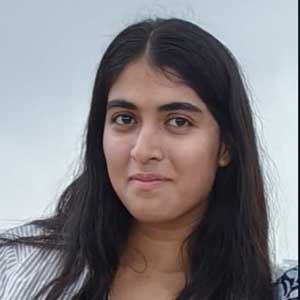
The writer is a a student of BA Economics, Kanoria PG Mahila Mahavidyalya, Jaipur.