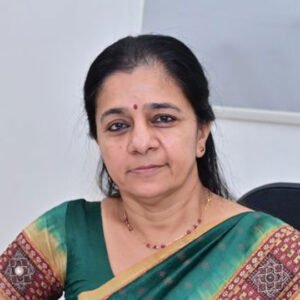
A green campus is not built through a few trees or one-day activities, it begins with a shift in mindset and grows through sustained, meaningful action. A green campus cannot be reduced to tree plantation drives or awareness posters, said Professor Seema Agrawal, Kanoria PG Mahila Mahavidyalya, Jaipur. This idea set the tone for the session on green campus, greener futures at the 3rd Yuva Sustainability Conference & Awards 2026 where speakers moved the conversation beyond symbolism and towards what it truly takes to build sustainable institutions.
Setting the context, Professor Sanjeev Bhanawat, former Head of the Centre for Mass Communication at the University of Rajasthan, drew attention to the scale of the crisis. Climate change and environmental degradation, he noted, are among the most pressing challenges of our time. For young people, this is not a distant concern, the choices they make today will shape the future they inherit.
From framing the problem, the session moved towards rethinking solutions. Professor Seema Agarwal, Principal of Kanoria PG Mahila Mahavidyalaya, challenged the idea of sustainability as a one-off activity. A green campus, she explained, must become part of everyday institutional practice, extending beyond campus gates and into lived behaviour.
Her approach was both practical and rooted in context. Institutions, she suggested, should begin by working with nature rather than against it – prioritising native species suited to local ecosystems. She spoke of campuses that could host botanical and medicinal gardens, create spaces for birds like the Indian sparrow, and develop butterfly gardens that support biodiversity. Even limited spaces, she noted, can be transformed through the Japanese Miyawaki method, where dense planting allows mini-forests to grow rapidly.
Sustainability, however, extends beyond green cover. Turning to infrastructure, she highlighted the need for solar energy, rainwater harvesting and regular waste audits. Waste, she stressed, must be segregated and composted, while students should actively engage with these processes. Learning, in this sense, must go beyond classrooms and become experiential.
Adding a deeply personal dimension, Bikram Upadhyay, senior journalist, took the audience back to a familiar memory. He says, “We measure development by infrastructure, not by the green spaces we preserve.” Reflecting on a childhood memory of neem tree near his childhood school , one he revisited years later, finding it still standing. The moment stayed with him long enough to become a poem, from which he recited a line: “Ghar ke paas waala neem ka ped ab budha ho chala hai.” The story served as a quiet reminder that green spaces are not just ecological necessities, but emotional anchors.
From reflection, he moved to critique. Institutions today, he observed, are often evaluated by the scale of their infrastructure rather than their ecological footprint. Referring to the UI GreenMetric, an international ranking of universities based on sustainability indicators, he pointed to countries like Indonesia that have made notable progress in building greener campuses, encouraging others to take inspiration.
He also underscored the role of media in shaping public understanding of environmental issues. By documenting sustainability efforts and recognising institutions that are making progress, media can encourage wider participation and accountability.
As the session concluded, the message remained clear and consistent. A green campus is not a symbolic checklist, but a continuous process that demands intention, planning and action. For institutions and young people alike, the task is not just to imagine sustainable futures, but to actively build them – one decision, one action at a time.
Lavanaya Sinha is pursuing Bachelors in Journalism and Mass Communication at JIMS Vasant Kunj, New Delhi.
