Sustainability today sits at a paradox; widely discussed, yet rarely practised in everyday life. This tension shaped the conversations at a session on of the 3rd Yuva Sustainability Conference & Awards 2026, held at the Indian Habitat Centre, New Delhi, where speakers reflected on the need to move beyond awareness towards deeper cultural and behavioural change.
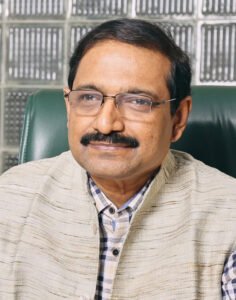
Setting the tone, Professor KG Suresh, Director at the Indian Habitat Centre, addressed the growing environmental challenges of an increasingly congested world with a message grounded in hope. Sustainability, he noted, is no longer a niche concern but a global priority. Ignoring early signs of climate change, he warned, will only intensify India’s carbon emission challenges. For him, the solution lies in embedding green values early, particularly among young people where long-term behavioural shifts can take root most effectively.
Reflecting on the contradictions of the digital age, he cautioned against the distractions of online trends that often take attention away from real-world environmental concerns. Using examples such as the Oxygen Tax in Madhya Pradesh, he illustrated how small, symbolic measures can serve as reminders that natural resources are shared responsibilities. Technology, including AI, he argued, must be used to solve real environmental challenges rather than add to digital noise.
Calling for a cultural shift, he emphasised the need to integrate environmental education into everyday learning through accessible mediums such as folk traditions, poetry and storytelling. Drawing from the Indian philosophy of Vasudhaiva Kutumbakam — the idea that the world is one family — he advocated for a more rooted and collective approach to conservation. His message to young people was clear; move from being passive digital consumers to active participants in environmental restoration.
Expanding the conversation on development, Padma Bhushan awardee Dr Anil Prakash Joshi, Founder of HESCO, challenged prevailing notions of progress. Distinguishing between a consumer-driven civilisation and a culture rooted in nature, he cautioned that over-reliance on technology risks distancing people from ecological realities. The growing influence of artificial systems, he noted, is reshaping priorities often at the cost of mental well-being and environmental balance.
He questioned the effectiveness of modern, technology-driven solutions, pointing out that natural alternatives, such as trees remain more sustainable than artificial fixes like purifiers. Highlighting the scale of the global crisis, from plastic pollution to increasing natural disasters, he stressed that humanity has lost its rhythm with nature. A return to indigenous knowledge systems and the idea of samriddhi — true, holistic prosperity is essential, he argued.
Bringing an industry perspective, Dr Angelo George, CEO of Bisleri International, introduced the concept of “sustainomy”, positioning water as a form of currency and emphasising its value in shaping sustainable futures. He highlighted the critical role of young people as key drivers of climate action, capable of bridging the gap between awareness and implementation.
Complementing this, Professor Dev Swarup reinforced the need for a non-materialistic culture, where sustainability is seen not merely as policy, but as an ethical responsibility embedded in daily life. Across discussions, speakers emphasised that while science, policy and law are important, real and lasting change depends on individual action and skill-based learning.
Addressing the paradox of sustainability requires a shift in values, habits and systems. For young people, the challenge is not only to understand sustainability, but to practise it, turning awareness into action and responsibility into everyday behaviour.
Aarushi Tripathy is pursuing Bachelors in Journalism and Mass Communication at JIMS, Vasant Kunj, New Delhi
