
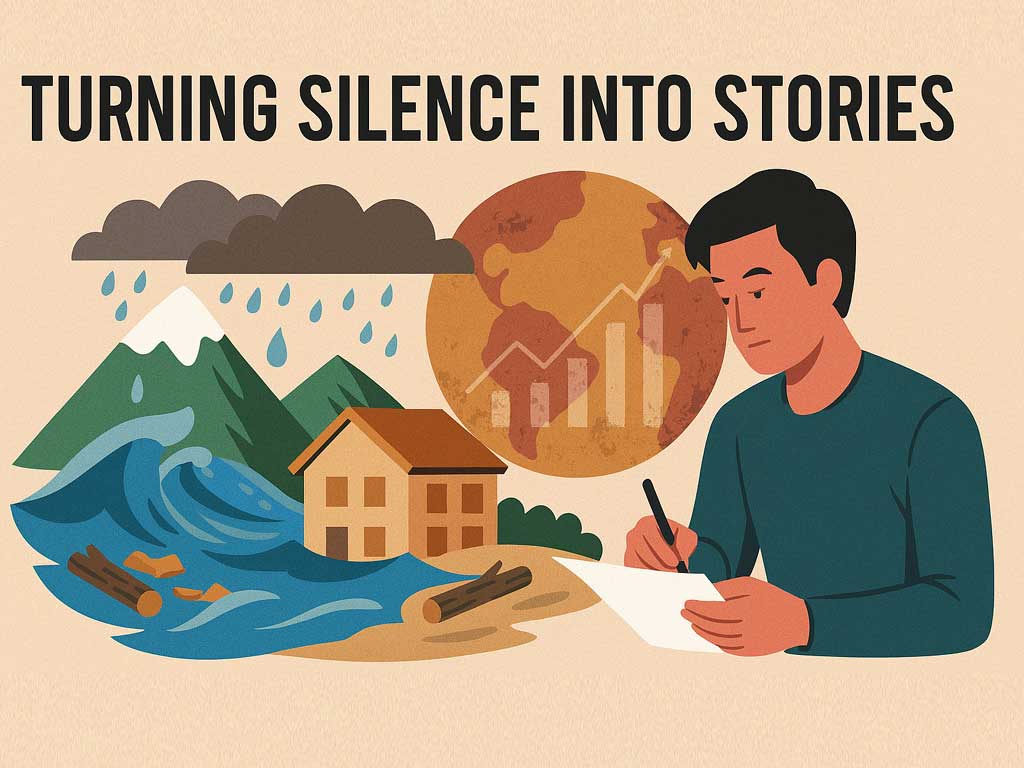
Every time I see the news flashing on the television about the ongoing situation in our country, one thought always strikes me: why are we not changing our ways? We live in a time when we are constantly bombarded with reports, data and warnings regarding climate change and environmental destruction, yet those facts often fail to stir us into action. I have come to realise that information is not missing, but there is a massive gap in spreading it. People don’t change when they are told what to do; they change when they feel why it matters. And stories have the power to change the perspective of the audience. That is why I aspire to become a sustainable storyteller, someone who can weave narratives, awaken minds and inspire youth for a better future.
For instance, the recent flood in Uttarkashi is a wake-up call for all of us. It was not just a natural disaster; it was a warning. Entire roads, homes and livelihoods were swept away within a minute, leaving people devastated and families broken. People were on the verge of despair and living in a vulnerable situation. While experts continue to debate whether it was a true cloudburst or a glacial triggered flood, one thing is undeniable: climate change is reshaping the fragile Himalayan ecosystem. Rising temperatures are melting the glaciers, altering rainfall patterns and increasing the frequency of destructive events.
Yet, despite this tragedy, the story faded quickly from the mainstream headlines. A few news reports broke the story, but it was not amplified enough to spark a meaningful dialogue on climate change and the urgent need for resilience in mountain regions. The gap in coverage shows why sustainable storytelling is important.
The disaster in Uttarkashi was not an isolated one, but the incident was not given the narrative of climate change, which is directly linked to SDG 13: Climate Action. Unfortunately, this connection was not communicated effectively. The public saw this incident as random misfortune rather than a global crisis. This is where storytelling plays a pivotal role in shaping the narrative of people.
In a nutshell, as a sustainable development storyteller I see these incidents as moments where silence is dangerous. If the story is not told with the urgency and empathy it deserves, it will be forgotten and will not leave an impact. By telling these stories with honesty and the right narrative we can leave a lasting impression on the audience. Storytelling is not about adding fear; it is about telling the facts which mainstream media fails to do. If we tell these stories well, they can open people’s eyes, build empathy, and push society to make better choices.
As I conclude, I just want to highlight the fact that every story of loss can also be a story of hope. It depends on how we tell that story.