
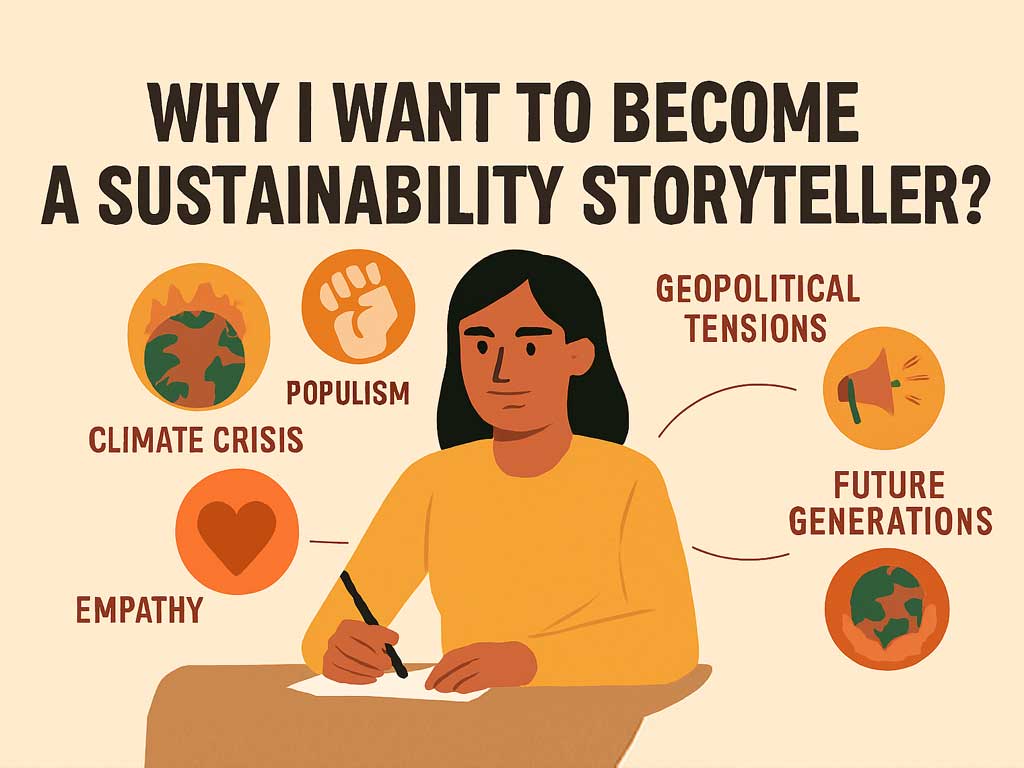
In uncertain times, when we face climate change, populist narratives, geopolitical tensions, and climate misinformation, sustainability and positive storytelling can catalyse climate action by motivating individuals through values and morals. Current trends highlight an interesting aspect: relying on ‘issue-specific tactics’ is not working; we need to engage with cultural values, promote empathy for others, encourage concern for future generations, and recognise the importance of relationships. This aligns with the fact that people are more likely to engage in pro-environmental behaviours if they are in line with their values. Storytelling can be a powerful tool to induce action or participation, changing values, beliefs, social identification, efficacy beliefs, and thus motivation for collective climate action.
For instance, only 53% of national curricula include climate education, fewer than 40% of teachers worldwide feel confident teaching climate change, and only about one-third can explain its local impacts (IPCC; UNESCO). Storytelling that takes local nuances into account is crucial for fostering meaningful change.
Political leaders also avoid addressing complex issues to maintain popular support. Such leaders prioritise short-term electoral gains over long-term vision, opting for immediate action with visible and quick benefits. This leaves us in a difficult position when combating a systematic bias against implementing politically costly but necessary measures. The reality is that climate-friendly costs are immediate, but the benefits are long-term and accrue for generations. Storytelling can be a critical tool in addressing and overcoming such biases.