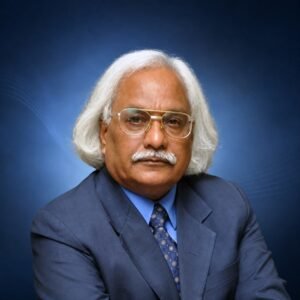
Universities cannot teach sustainability credibly unless they practise it through their campuses, curricula and research, Prof (Dr) P B Sharma said at the 5th Yuva Sustainability Conference, held online on 12 August 2026 to mark International Youth Day 2026. The conference, themed ‘Mainstreaming Sustainability in the Education Ecosystem’, was organised by Voices of Bharat: Yuva for Sustainability, an initiative of Sustainability Karma.
Sharma, Vice Chancellor of Amity University, Haryana, described sustainability as the ‘master key’ not only to sustainable development but to a happy and healthy humanity and planet. India has made enormous advances since independence, he said, from economic expansion to space exploration. The task now is to correct the environmental costs of that progress without abandoning the ambition of national development.
Viksit Bharat 2047 cannot be understood as an economic target alone, Sharma argued. By the centenary of independence, India must combine prosperity with clean air, secure water, biodiversity, public health and responsible industry. Schools, colleges and universities will determine whether sustainability becomes the organising principle of development or remains a promise outside everyday decisions.
“Sustainability is the master key,” Sharma said. It protects the interests of people and Mother Nature while allowing industry and enterprise to prosper. The turning point for education is therefore not to teach every learner the same environmental content, but to help every field understand how its work affects human and ecological well-being.
Generation G expects universities to lead by example
Sharma contrasted his own generation with what he called ‘Generation G’ – young people who are more environmentally conscious and far more willing to question authority. Earlier students rarely challenged their teachers or vice chancellors, he said. Today’s learners are justified in asking why institutions preach sustainability without demonstrating it.
That question changes the standard by which a university should be judged. A lecture on water security carries little weight if the campus wastes water; a course on pollution loses credibility when the institution does not measure its own air or waste. Sustainability education becomes persuasive when the physical campus, academic curriculum and research agenda reinforce one another.
At Amity University Haryana, Sharma said, the effort begins with its 110-acre campus. The university harvests rainwater and treats, recycles and reuses its wastewater, including sewage, within the campus. He said the Vice Chancellor’s residence is included in the same system, making conservation an institutional rule rather than a symbolic programme applied only to selected buildings.
A campus that demonstrates water, air and biodiversity security
Water security is paired with continuous attention to air quality. Sharma said a government monitoring station located on the campus allows the university to track conditions every day. He described the campus air as several times better than that of Gurugram and Delhi, attributing the difference not only to greenery but to a wider set of operating practices designed to reduce environmental pressure.
Sharma said the campus received LEED Platinum certification in 2017 and has continued to expand its green practices. Biodiversity provides another visible indicator: he reported 44 varieties of butterflies on the campus, which he regarded as evidence of biological and ecological balance. Such signs give students an opportunity to connect environmental quality with measurable campus decisions.
The demonstration extends into academic life. Sharma called for green science, green engineering, green management, green law and green consciousness across disciplines, including journalism and social media. Communicators have a particular responsibility, he said, to explain what India must do to achieve high levels of sustainability by 2047 and to make successful practices visible beyond the campus.
Amity has integrated sustainability courses into undergraduate, postgraduate and research programmes, Sharma said. The objective is to develop a 360-degree understanding of sustainability while also building domain-specific knowledge in areas such as circularity, renewable energy, waste reprocessing and reuse. Students should learn the concept, see it practised and pursue the deeper research needed to make it scalable.
A five-part Panchamrit for sustainable development
Sharma proposed a ‘Panchamrit’ – a five-part framework for rebalancing development. Production and profit have long dominated economic thinking, he said. The new model must bring people and planet into the same decision alongside product, productivity and profit. Each element answers a different question, and sustainability emerges only when all five are considered together.
People: Development must protect health and dignity
The first test of development is whether it enables people to live healthy, capable and meaningful lives. Economic growth that leaves communities with polluted air, unsafe water or preventable disease shifts costs onto the public. Education, research and industry must therefore measure success in terms of human well-being as well as output.
Planet: Nature is a stakeholder, not an externality
Planet places water, air, soil, climate and biodiversity inside the development calculation. It asks institutions to recognise ecological limits and future generations. A university that secures its water, monitors air quality and protects biodiversity demonstrates that environmental responsibility can be designed into the functioning of a complex institution.
Product: Design determines environmental impact
Products and services carry environmental consequences throughout their lives. Sharma’s call to ‘design for sustainability’ means considering resource use, safety, durability, repair, reuse, recycling and disposal from the beginning. Whether the product is a laptop or a drinking glass, design should minimise harm rather than leave pollution to be managed after production.
Productivity: Efficiency must include resources and waste
Productivity cannot mean producing more while ignoring energy, water and material losses. In a sustainable model, efficiency includes renewable energy, circular resource flows and the recovery of waste. Research and innovation should help institutions and industries create more value with less ecological damage.
Profit: Economic viability remains necessary, but not sufficient
Profit sustains enterprise and employment, but it cannot remain the sole measure of performance. In Sharma’s framework, profit is legitimate when it is earned alongside the protection of people and planet and through products and processes designed responsibly. The model seeks economic prosperity with environmental health rather than prosperity purchased at nature’s expense.
Green jobs and a sustainability meter
Sharma urged policymakers to create stronger employment pathways for graduates of sustainability management, environmental science, engineering and related programmes. He proposed that industries should be required to appoint sustainability experts capable of measuring production, resource use and environmental performance. ‘I want to see sustainability metered everywhere,’ he said.
The idea of a sustainability meter is a demand for accountability. Institutions and companies should be able to show how much water and energy they use, what they recover, what they emit and whether their targets are improving. Measurement can connect education and research with operational decisions, while dedicated professionals can prevent sustainability from becoming an additional duty with no clear ownership.
Sharma also imagined universities becoming more self-reliant by producing renewable energy, securing water and, where possible, growing milk and vegetables within their campuses. The purpose is not withdrawal from modern science and technology. It is to move closer to nature while advancing the frontiers of knowledge – using innovation to strengthen resilience rather than deepen dependence and waste.
The Tricolour as a design-for-sustainability code
Sharma used the Indian Tricolour as a metaphor for sustainable design. Saffron, in his interpretation, evokes energy efficiency; white stands for safety and reliability; green represents sustainability across products and services; and the Ashoka Chakra calls for continuous movement and design that causes the least possible harm.
The metaphor turns national pride into a practical standard. A product carrying India’s identity should also communicate efficiency, safety, reliability and ecological responsibility. The larger ambition is for Indian higher education, research and innovation to lead globally through solutions that create jobs and prosperity without damaging nature or undermining people.
Sharma’s message to young people was direct: sustainability is not merely desirable but essential to a happy, healthy and prosperous life. Students should treat it as a way of life and a philosophy of work wherever they go. Universities, in turn, must provide the knowledge, campus experience and research environment that allow that commitment to become professional practice.