Principal, Sri Sathya Sai Institute of Higher Medical Sciences – College of Nursing, Bengaluru, Karnataka
Sri Sathya Sai Institute of Higher Medical Sciences – College of Nursing, Bengaluru, recipient of the First Prize under the Zero Waste and Circularity category at the Sustainability Karma Campus Leadership Awards 2026, is recognised for its Zero Waste Generation Initiative focused on source segregation, recycling, reuse, composting and responsible consumption.
The Zero Waste Generation Initiative promotes responsible consumption, efficient resource utilisation and sustainable waste management practices to minimise waste generation and reduce dependence on landfills and incinerators. By encouraging waste segregation at source, recycling, reuse and composting, the initiative fosters environmentally responsible behaviour among students and staff.
The programme also raises awareness of the environmental, social and economic impacts of waste generation by promoting reduced consumption of single-use plastics, the adoption of biodegradable alternatives and mindful purchasing practices. It reinforces the principles of the circular economy by encouraging the reuse and repurposing of materials to extend their life cycle.
The initiative seeks to instil environmental responsibility, particularly among students, empowering them to become advocates for sustainable living. By integrating waste reduction practices into everyday routines, it contributes to cleaner surroundings, improved public health and a reduced carbon footprint, supporting a healthier planet for future generations.
Description
The initiative was introduced in response to increasing waste generation driven by overconsumption and the widespread use of single-use products. Recognising the environmental impact of overflowing landfills and the loss of valuable reusable materials, the institution adopted a campus-wide zero-waste approach to promote responsible consumption and sustainable waste management.
Key activities include:
- Awareness programmes on waste segregation and zero-waste practices using live demonstrations, videos and posters.
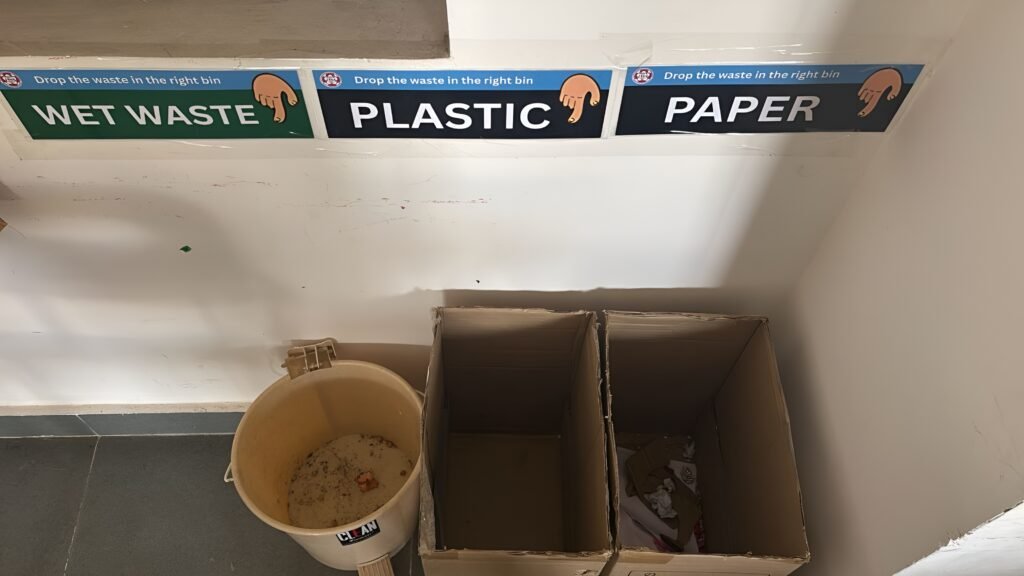
- Provision of appropriately labelled waste bins across the campus.
- Regular monitoring to ensure correct waste segregation.
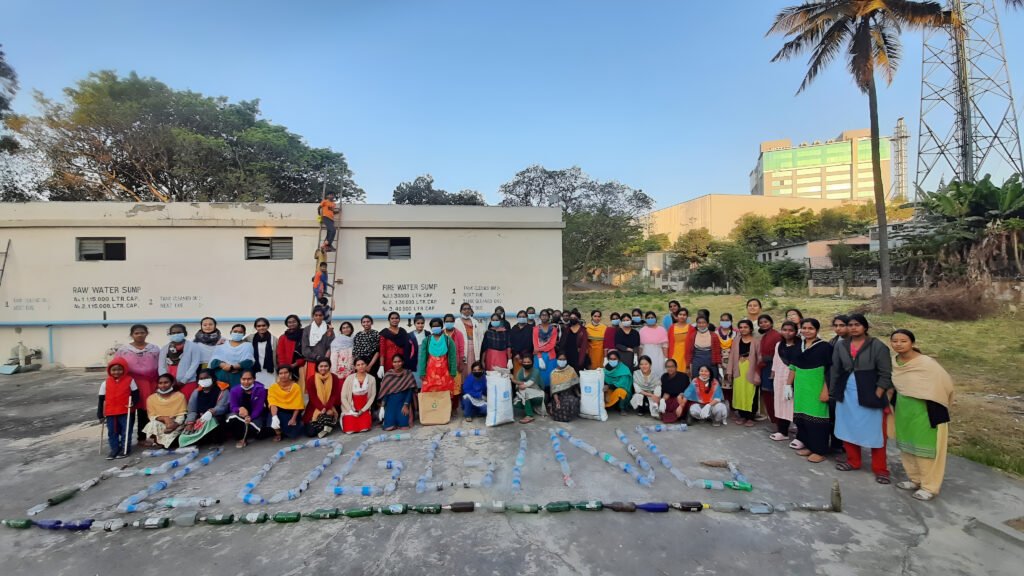
- Student-led volunteer teams to supervise and strengthen implementation.
- Continuous feedback mechanisms to improve participation and compliance.
Objectives
The initiative aims to:
- Raise awareness of the environmental, social and economic impacts of waste generation and improper disposal.
- Promote responsible consumption through the principles of Reduce, Reuse and Recycle.
- Equip students and staff with practical knowledge and skills to adopt zero-waste lifestyles.
- Encourage sustainable alternatives to single-use and non-biodegradable materials.
- Reduce landfill dependency and pollution through waste minimisation, segregation and resource recovery.
Innovation
Recognising that students spend most of their day on campus, the institution embedded zero-waste practices into daily routines through continuous engagement rather than one-time campaigns.
Awareness sessions using practical demonstrations, videos and posters were complemented by strategically placed waste bins, regular monitoring and a student volunteer network. This peer-led implementation model strengthened behavioural change and encouraged long-term ownership of sustainable waste management practices.
Outcomes
The initiative has generated positive environmental, social and educational outcomes.
Key achievements include:
- Reduced waste generation across the campus.
- Improved waste segregation and sustainable resource management.
- Lower dependence on landfill disposal through increased reuse and recycling.
- Greater environmental awareness among students and staff.
- Long-term behavioural changes supporting environmentally responsible lifestyles.
Scalability
The initiative demonstrates strong potential for replication by other educational institutions.
Active participation by students and staff, combined with clearly defined responsibilities and continuous monitoring, has created a practical and sustainable implementation model. The success of the programme has attracted representatives from other institutions seeking to understand its workflow and adapt the initiative within their own campuses, demonstrating its wider applicability and scalability.