Principal, Miranda House, Delhi
Miranda House, University of Delhi, recipient of the Second Prize under the Sustainability in Curriculum & Research category at the Sustainability Karma Campus Leadership Awards 2026, is recognised for its living laboratory approach, including circular economy research, paper recycling, compost improvement, green chemistry and the Swachh Bharat Value-Added Course.
Miranda House has integrated sustainability into its curriculum, research, campus operations and community engagement by transforming the campus into a living laboratory for environmental learning. The institution combines academic inquiry with practical action, enabling students and faculty to address real-world sustainability challenges through research-driven initiatives and experiential education.
Faculty-led research promotes circular economy practices, sustainable waste management and green chemistry through projects on paper recycling, compost quality improvement and environmentally responsible laboratory methods. These initiatives strengthen scientific research while reducing environmental impact.
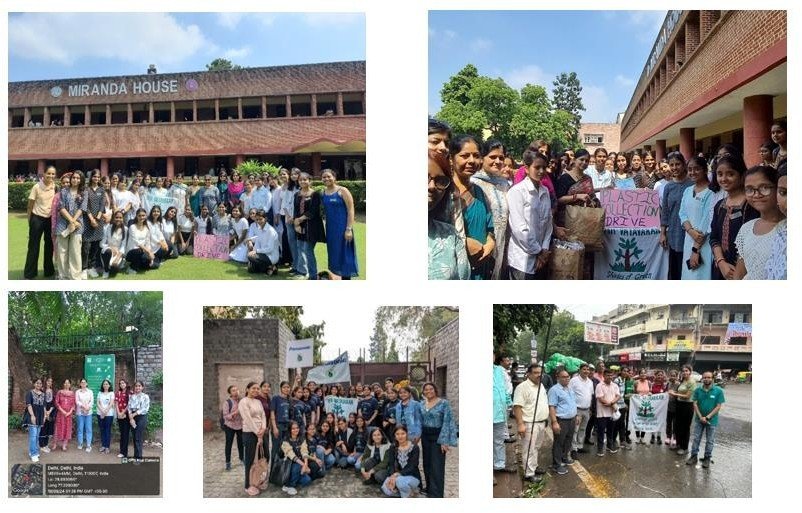
Sustainability is further reinforced through the Swachh Bharat Value-Added Course, where students participate in recycling unit visits, waste audits, cleanliness drives and awareness campaigns, encouraging responsible consumption and environmental stewardship both on and off campus.
Description
The initiative integrates sustainability into teaching, research and campus life through interdisciplinary research projects, experiential learning and environmentally responsible practices.
Key activities include:
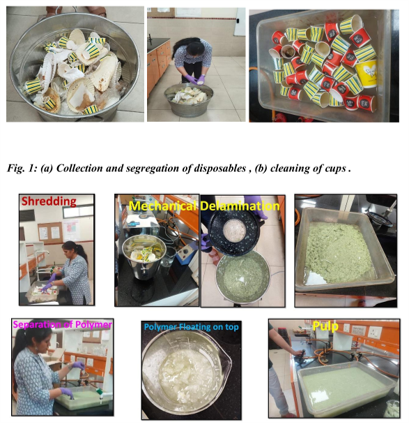
- Paper-based disposables recycling and circular economy research.
- Compost quality improvement through scientific analysis.
- Green chemistry practices to reduce laboratory waste.
- Swachh Bharat Value-Added Course.
- Recycling unit visits and waste audits.
- Cleanliness drives and awareness campaigns promoting responsible consumption.
Objectives
The initiative aims to:
- Integrate sustainability into teaching and research.
- Promote circular economy and responsible resource use.
- Encourage experiential learning through campus-based activities.
- Strengthen environmental awareness and responsible consumption.
- Develop environmentally responsible graduates.
Innovation
The initiative combines research, teaching and campus operations within a living laboratory model. Faculty-led research on circular economy, composting and green chemistry is complemented by experiential learning, enabling students to apply scientific knowledge to practical sustainability challenges.
Outcomes
The initiative has strengthened sustainability across academic, research and campus activities.
Key achievements include:
- Advanced research on paper recycling and circular economy.
- Improved on-campus compost quality through scientific innovation.
- Reduced environmental impact through green chemistry practices.
- Enhanced student participation in experiential sustainability learning.
- Increased awareness of responsible consumption and waste management.
Scalability
The initiative offers a research-led model that can be adapted by higher education institutions seeking to integrate sustainability into teaching and academic practice.
Its scalable components include:
- Living laboratory approach to sustainability.
- Circular economy and recycling research.
- Green chemistry laboratory practices.
- Campus composting and waste management.
- Value-added sustainability courses.
- Experiential learning through campus and community engagement.
By combining academic research with practical implementation, the model provides a replicable framework for institutions seeking to embed sustainability into education, research and campus operations