Executive Summary
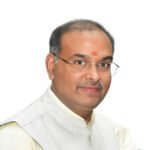
Prof Vinay Kumar Pathak, Vice Chancellor of Chhatrapati Shahu Ji Maharaj University (CSJMU), has transformed sustainability governance by embedding environmental responsibility into institutional policy, planning and decision-making. In this role, he has shifted sustainability from a series of isolated initiatives to a comprehensive, measurable and accountable governance framework.
Under his leadership, the University has introduced robust policies on water, energy, waste, procurement and carbon management, supported by regular audits, public reporting and measurable performance indicators. His systems-based approach demonstrates how universities can integrate sustainability into governance while advancing operational excellence, environmental stewardship and institutional transparency.
Description
Recognising that long-term sustainability requires institutional commitment rather than fragmented initiatives, Prof Pathak has championed a governance-first approach that embeds sustainability across every aspect of university administration.
His leadership has resulted in the development and implementation of comprehensive policies covering green campus development, water management, waste reduction, sustainable procurement, energy efficiency, carbon management and responsible investment. These policies have translated into measurable operational improvements, including campus-wide water monitoring, wastewater treatment and reuse, systematic waste segregation and recycling, energy audits and increased adoption of low-carbon energy sources.
A defining feature of his leadership is the emphasis on transparency and accountability. CSJMU now publishes annual Sustainability Reports alongside SDG-wise progress reports, enabling the University to monitor performance against all 17 Sustainable Development Goals while strengthening public accountability.
Beyond campus operations, sustainability has been integrated into teaching, student engagement and community outreach, ensuring that environmental responsibility becomes an integral part of institutional culture.
Objectives
Prof Pathak’s work aims to institutionalise sustainability through strong governance, evidence-based decision-making and transparent reporting.
His objectives include:
- embedding sustainability within institutional policies and strategic planning;
- reducing environmental impacts through efficient management of water, energy and waste;
- strengthening circular economy practices across campus operations;
- enhancing institutional transparency through regular sustainability reporting; and
- demonstrating how public universities can lead sustainability through governance and accountability.
Innovation
Prof Pathak’s contribution lies in treating sustainability as an integrated governance system rather than a collection of environmental projects.
His approach combines measurable performance indicators, institutional policies, audit mechanisms and public disclosure to create a culture of continuous improvement. By integrating sustainability into procurement, infrastructure planning, financial governance and institutional reporting, he has established a model that is both practical and accountable.
This governance-driven framework demonstrates how sustainability can become a core institutional responsibility supported by measurable outcomes rather than symbolic commitments.
Outcomes
Under Prof Pathak’s leadership, CSJMU has achieved significant progress in institutional sustainability.
The University has strengthened water conservation through comprehensive monitoring and wastewater reuse systems, improved waste management through high recycling rates, expanded the use of low-carbon energy and introduced regular sustainability reporting aligned with the Sustainable Development Goals.
Institutionally, sustainability has become embedded within academic, administrative and operational processes, creating a culture of environmental responsibility supported by evidence-based governance and continuous performance monitoring.
Scalability
The governance framework established by Prof Pathak offers a highly replicable model for universities seeking to mainstream sustainability.
Its emphasis on leadership, institutional policy, measurable indicators and transparent reporting enables higher education institutions to strengthen sustainability without relying solely on major infrastructure investments. The framework provides a practical blueprint for universities seeking to integrate sustainability into governance, operations and long-term strategic planning.
Sustainable Development Goals
Prof Vinay Kumar Pathak’s work contributes directly to:
- SDG 4 – Quality Education
- SDG 6 – Clean Water and Sanitation
- SDG 7 – Affordable and Clean Energy
- SDG 12 – Responsible Consumption and Production
- SDG 13 – Climate Action
- SDG 17 – Partnerships for the Goals