What if a discarded sheet of paper could become a work of art, organic waste could turn into a valuable resource, and a school rooftop could meet most of its electricity needs through the sun? At Bal Bhavan Public School, Mayur Vihar-II, Delhi, these ideas find expression in everyday practice. Guided by its motto, “Goodness Before Greatness,” the school is turning sustainability into a way of life, empowering students to conserve resources, inspire communities and recognise that even small actions can make a lasting environmental difference.
Aligned with the National Education Policy (NEP) 2020 and the Sustainable Development Goals (SDGs), particularly SDGs 12, 13 and 15, the school integrates sustainability into its curriculum and daily routines. Its Global Citizenship Programme (GCP) provides a designated space for activities, discussions and creative projects that encourage students to practise, rather than merely discuss, responsible citizenship.
From waste management and recycling to renewable energy, organic gardening and community outreach, the school’s initiatives reflect the principles of Reduce, Reuse and Recycle. Together, they demonstrate how environmental responsibility can become a lived experience, empowering young learners to make informed choices and inspire change beyond the campus.
Turning Waste into Resources: Plastic waste management is an important part of this effort. Through collection drives and awareness activities, students, teachers and parents are encouraged to reduce single-use plastics, segregate waste at source and adopt reusable alternatives. Poster-making, slogan-writing and discussions help students understand the environmental consequences of plastic pollution and the importance of responsible disposal.
The school also addresses the growing challenge of electronic waste. Students and families are encouraged to collect obsolete mobile phones, chargers, batteries, earphones and other electronic accessories rather than dispose of them with ordinary household waste.
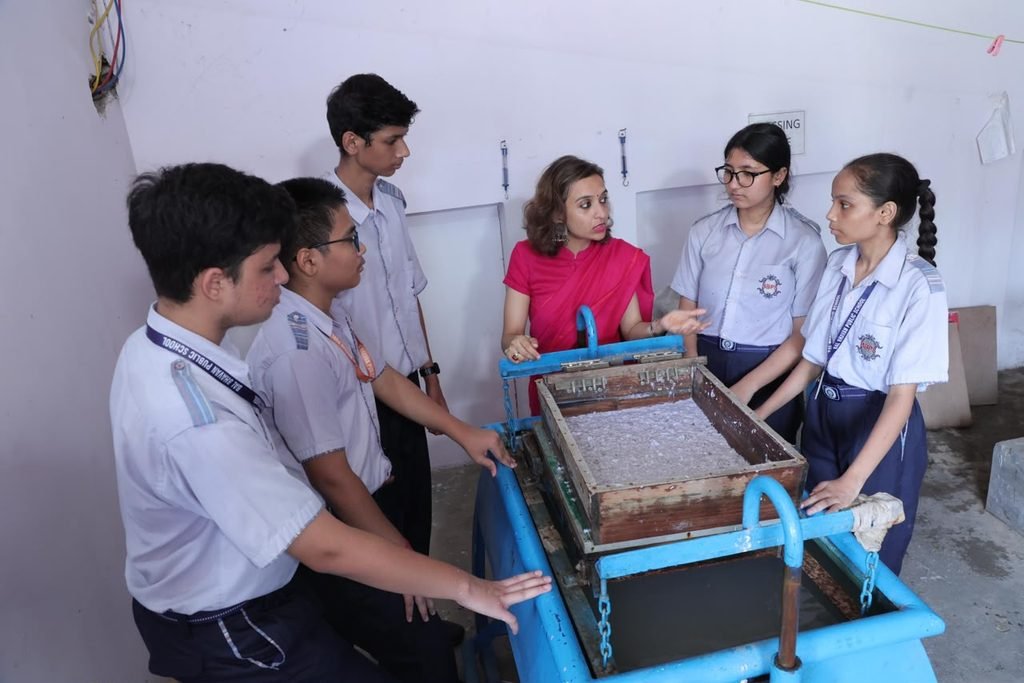
Paper conservation complements these initiatives. Students are encouraged to reuse sheets, write on both sides of paper, avoid unnecessary printing and segregate recyclable material. Discarded paper finds a second life through art and craft, decorative objects, models and learning resources. These activities combine creativity with resource conservation, demonstrating that thoughtful reuse can reduce waste while creating something useful.
From Waste to Wealth: The school’s approach to organic waste illustrates how sustainability can connect environmental conservation with practical value. Biodegradable waste from suitable sources is composted to produce nutrient-rich manure, which supports gardening activities on campus.
The process introduces students to decomposition, soil fertility and natural cycles while demonstrating how materials that might otherwise be discarded can become valuable resources. The initiative of making and selling manure also introduces an economic dimension, encouraging learners to recognise the potential of responsible resource management.
This experience brings the idea of a circular economy closer to everyday life. Rather than treating waste as the end of a material’s usefulness, students discover how it can be transformed into a resource through careful management and innovation.
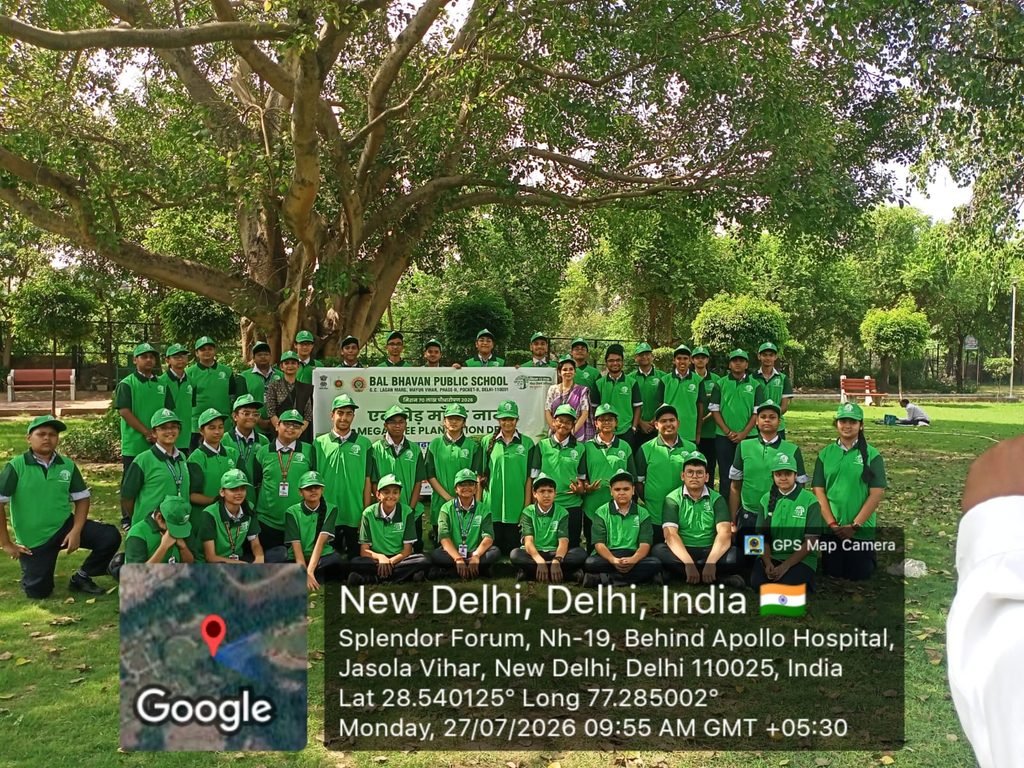
Taking Environmental Awareness Beyond the Campus: For Bal Bhavan Public School, sustainability is not confined to school premises. The institution uses nukkad nataks, or street plays, to communicate environmental messages to the wider public. Through engaging performances, relatable characters and thought-provoking dialogues, students highlight the importance of reducing plastic consumption, segregating waste, maintaining cleanliness and protecting the environment.
Such performances have helped take environmental awareness into public spaces. These experiences also strengthen communication, confidence, teamwork and empathy, enabling students to understand how their voices can contribute to social change.
Awareness rallies and community cleanliness drives reinforce this message. Armed with slogans, placards and public messages, students encourage citizens to adopt responsible waste-disposal practices, avoid single-use plastics and keep their surroundings clean. Participation in these activities fosters civic sense and a shared understanding that cleaner neighbourhoods require collective effort from schools, families and communities.
Environmental competitions provide another avenue for engagement. In October 2024, seven students participated in the Indian Centre for Plastics in the Environment (ICPE) Plastic Olympiad, which brought together participants from more than 50 schools. Students from Bal Bhavan Public School secured second and third positions, demonstrating their engagement with plastic pollution and responsible resource management.
Such opportunities encourage research, critical thinking and problem-solving, while recognising students as active participants in the search for environmental solutions.
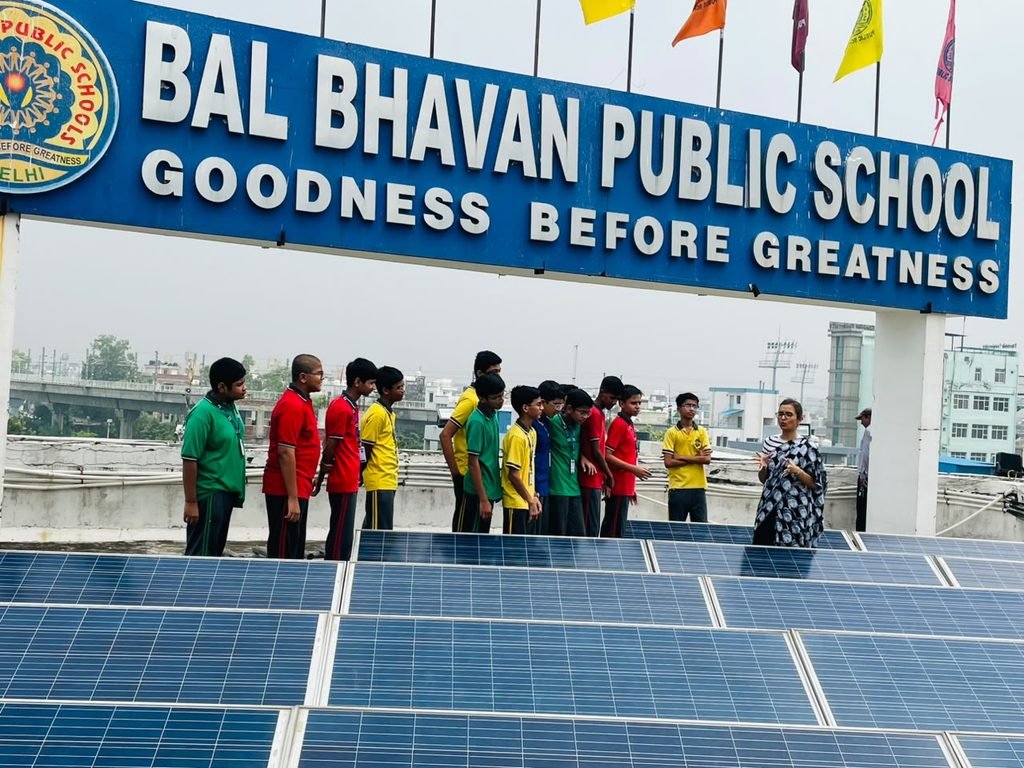
Harnessing Renewable Energy and Learning from Nature: The school’s commitment to sustainability is reflected in its infrastructure as well as its educational activities. Its solar power installation generates approximately 80% of the school’s electricity consumption, demonstrating the role renewable energy can play in reducing dependence on conventional electricity sources.
The installation provides a practical learning opportunity, connecting classroom discussions on clean energy with a visible example of its application. It also reflects the objectives of SDG 7, Affordable and Clean Energy, and SDG 13, Climate Action, reinforcing the importance of responsible energy use.
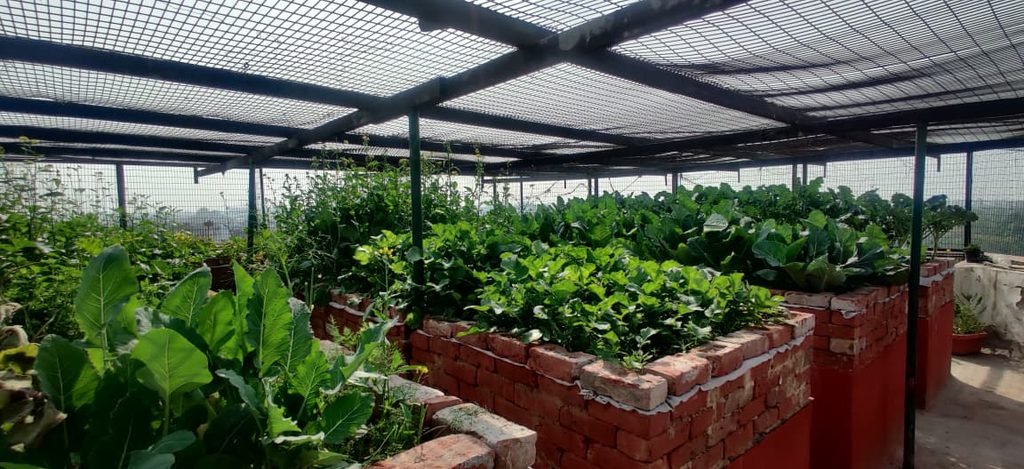
The organic and herbal garden offers another opportunity for experiential learning. By caring for plants, students observe the relationships between sunlight, water, soil and plant growth. They develop an appreciation of biodiversity, natural resources and the importance of nurturing living things.
The use of organic manure connects the garden directly with the school’s waste-management efforts. Together, composting and gardening demonstrate how different sustainability practices can complement one another, creating a practical understanding of resource efficiency and ecological balance.
Creativity, Innovation and Responsible Citizenship: The transformation of discarded materials into new products further strengthens the school’s sustainability culture. Students explore how paper, packaging and other suitable waste materials can be repurposed into models, decorative objects, art installations and learning resources.
These activities encourage design thinking, experimentation and problem-solving. They also complement the spirit of innovation fostered through the school’s Atal Tinkering Lab, showing students that new ideas need not always depend on new materials. Creativity can begin by finding a better use for what is already available.
Across these initiatives, the emphasis remains on connecting knowledge with action. Whether students conserve paper, participate in recycling drives, nurture plants or communicate environmental messages through street plays, they experience sustainability as a shared responsibility rather than an abstract concept.
Goodness Before Greatness: Bal Bhavan Public School demonstrates how a school can bring environmental responsibility into everyday learning through practical initiatives, creative engagement and community participation. Its work across waste management, recycling, composting, solar energy, gardening and public awareness reflects a holistic approach to nurturing environmentally conscious citizens.
At the heart of this journey is the motto “Goodness Before Greatness.” Its meaning comes alive when students make responsible choices, conserve resources and inspire others to care for their surroundings.
The school’s contribution lies not only in the initiatives it undertakes but also in the values it cultivates. By encouraging young learners to turn awareness into action, it is helping shape a generation that understands the importance of protecting nature and serving the community.
For Bal Bhavan Public School, sustainability is an ongoing commitment: one that begins with everyday choices, grows through collective action and carries the promise of a greener tomorrow.