Principal, Senior Secondary Model School for Persons with Visual Disabilities (MSVD), NIEPVD, Dehradun, Uttarakhand
Senior Secondary Model School for Persons with Visual Disabilities (MSVD), NIEPVD, Dehradun, recipient of the Second Prize under the Zero Waste and Circularity category at the Sustainability Karma Campus Leadership Awards 2026, is recognised for its Ecobrick Initiative, which repurposes non-recyclable plastic waste through inclusive, student-led action.
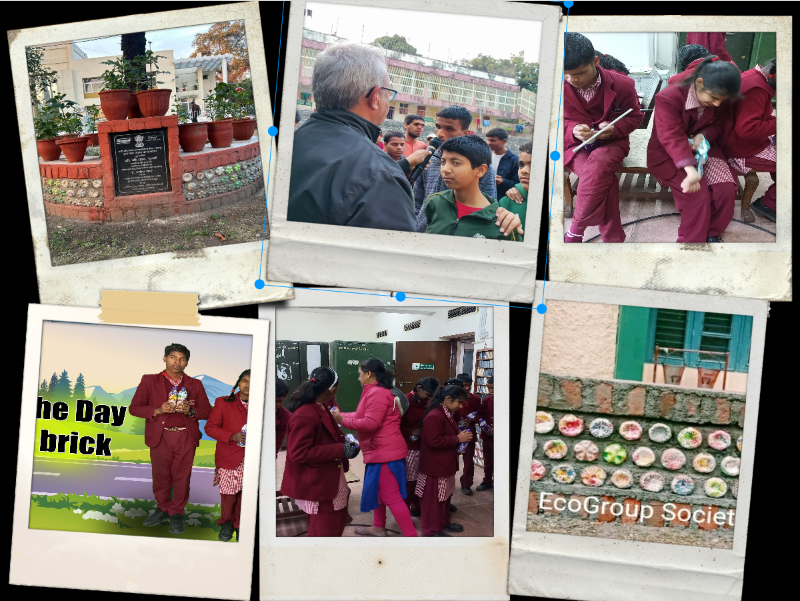
The Senior Secondary Model School for Persons with Visual Disabilities has transformed plastic waste management through an innovative Ecobrick Initiative that combines environmental conservation with inclusive education. Students actively collect, segregate and repurpose non-recyclable plastic waste by converting it into ecobricks for practical use on campus.
The initiative demonstrates that waste can become a valuable resource when supported by creativity and community participation. By engaging visually impaired students in every stage of the process, the programme promotes environmental responsibility while building confidence, teamwork and practical life skills.
Beyond reducing plastic waste, the initiative has created a culture of sustainability that encourages students to become active environmental ambassadors within their communities.
Description
The Ecobrick Initiative was introduced to address the challenge of non-recyclable plastic waste while encouraging students to participate in practical sustainability activities. The programme combines environmental stewardship with experiential learning in an inclusive educational setting.
Key activities include:
- Collection and segregation of non-recyclable plastic waste.
- Preparation of ecobricks using cleaned plastic bottles.
- Student participation in every stage of the process.
- Reuse of ecobricks for practical campus applications.
- Awareness programmes promoting plastic waste reduction and responsible consumption.
Objectives
The initiative aims to:
- Reduce non-recyclable plastic waste.
- Promote responsible waste management practices.
- Encourage active student participation in environmental conservation.
- Develop practical skills through experiential learning.
- Foster a culture of sustainability within the school and the wider community.
Innovation
The initiative combines inclusive education with circular economy principles by transforming plastic waste into useful construction material. It demonstrates that sustainability solutions can be simple, low-cost and accessible while empowering visually impaired students to become active contributors to environmental conservation.
Outcomes
The initiative has generated meaningful environmental and educational outcomes.
Key achievements include:
- Reduced plastic waste generated on campus.
- Increased student participation in sustainable waste management.
- Enhanced awareness of circular economy principles.
- Developed practical life skills through hands-on learning.
- Strengthened environmental responsibility among students and staff.
Scalability
The initiative offers a simple and low-cost model that can be replicated across schools, colleges and community organisations.
Its scalable components include:
- Plastic waste collection and segregation.
- Ecobrick production using locally available materials.
- Student-led sustainability activities.
- Environmental awareness campaigns.
- Integration of circular economy concepts into school education.
By combining inclusive participation with practical waste management, the initiative provides an effective model for reducing plastic waste while building environmental awareness and community engagement.