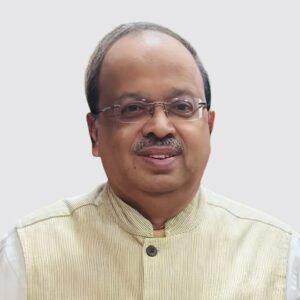
Sustainability education must move beyond information and awareness to shape how students behave, make decisions and lead, Dr Balakrishna Pisupati said at the 5th Yuva Sustainability Conference, held online on 12 August 2026 to mark International Youth Day 2026. The conference, themed ‘Mainstreaming Sustainability in the Education Ecosystem’, was organised by Voices of Bharat: Yuva for Sustainability, an initiative of Sustainability Karma.
Pisupati, introduced as the United Nations Environment Programme’s Country Head in India, invoked the proverb that humanity borrows the Earth from its children. He then reframed it: children are increasingly lending adults hope, and education must equip them to turn that hope into action.
Sustainability can no longer be treated as another subject, textbook or awareness campaign, he argued. Environmental science is too often a box-ticking exercise and lacks the seriousness institutions bring to artificial intelligence or digital transformation.
Instead, sustainability should provide the context for every discipline. Engineers, lawyers, doctors, architects and entrepreneurs will all confront climate risk, biodiversity loss, pollution and social inequality. The question is not where sustainability belongs in education, Pisupati said, but whether education can remain relevant without it at its heart.
India has strong institutions, expertise, intent and growing financial capacity, yet environmental risks continue to rise, he noted. Colleges commonly teach what sustainability is, but far fewer teach how decisions are made or how knowledge becomes daily practice.
“Knowledge is necessary, but behaviour is transformative,” Pisupati said. Knowing that climate change exists does not by itself alter conduct, just as understanding that plastic pollution is harmful does not automatically reduce consumption. The future, he added, belongs not to those who merely hold information but to those who can act on it in their homes and communities.
Pisupati invoked the ‘overview effect’ reported by astronauts. From space, the Earth appears as one planet without political borders, changing how astronauts understand human life and its fragility. Education, he suggested, should create that planetary connection without requiring students to leave Earth.
That shift begins with recognising sustainability as a question of relationships – with nature, with one another, with future generations and with ourselves. It therefore cannot remain confined to environmental science departments or be reduced to tree planting, solar panels and energy efficiency. Economics, business, law, literature, medicine and engineering all have a role.
Pisupati also challenged universities to rethink how they measure impact. Graduation rates, placements, publications and patents matter, but institutions should also ask whether their graduates make more sustainable decisions. Measures could include reductions in food waste, sustainable transport choices, water conservation and the emergence of climate leadership alongside academic performance.
A sustainable campus, in this view, is a living laboratory. Students should monitor biodiversity, study campus heat islands and passive cooling, audit waste and map energy use across departments. Such participation turns a campus from a collection of green infrastructure into a place where sustainable habits and judgement are learned.
Pisupati said UNEP is also examining the relationship between artificial intelligence, behavioural change and sustainability. The important question is not only how AI will create jobs or economic value, he argued, but whether it can help people become more sustainable. Policy, curricula and teaching must therefore connect knowledge with measurable changes in behaviour.
For nearly two centuries, education has prepared people to participate in the economy, move out of poverty and improve their livelihoods. The coming century demands a more ambitious purpose, Pisupati concluded: education must prepare people to sustain civilisation itself by enabling them to live, lead and innovate sustainably.