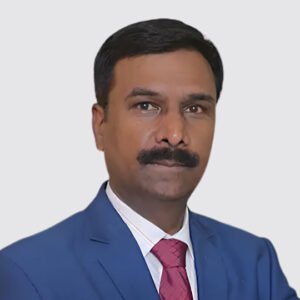
Green skills must be built through classroom learning, hands-on campus projects, industry partnerships and youth leadership, K. Ganesh said during a session on ‘Building Green Skills through Partnerships and Youth Leadership’ at the 5th Yuva Sustainability Conference. The online conference was held on 12 August 2026 for International Youth Day 2026 under the theme ‘Mainstreaming Sustainability in the Education Ecosystem’. It was organised by Voices of Bharat: Yuva for Sustainability, an initiative of Sustainability Karma.
Ganesh, Director of Sustainability and Corporate Affairs at Bisleri International, approached the discussion from an industry perspective. Sustainability, he said, begins with responsible use of water, food and materials, but its impact depends on collective action and changes in behaviour, habits and institutional culture.
Education should therefore embed environmental, social and economic responsibility from school onwards, rather than leaving sustainability to specialist degrees. Students should reach college already able to recognise the value of natural resources and connect everyday choices with air pollution, water contamination, biodiversity loss and climate change.
Ganesh organised his recommendations into seven areas: curriculum integration, green campuses, experiential learning, green skills and employment, industry-academia partnerships, community engagement and youth leadership. Curricula, he said, should cover climate change, biodiversity, water stewardship, circular economy, waste management and renewable energy while showing students the consequences of changing rainfall and rising pollution.
He used Bisleri’s water operations as a practical example. The company has worked to improve treatment efficiency, reuse residual water for gardening, treat sewage for flushing and capture rooftop rainwater, he said. It also restores check dams and undertakes recharge work around plants. According to Ganesh, Bisleri now recharges about 4.7 times the water it consumes, a claim he presented as evidence that intensive water users can still pursue water-positive operations.
Campuses can apply the same logic at a smaller scale by harvesting rainwater, installing rooftop solar, conserving electricity and promoting public transport or carpooling. Ganesh also urged institutions to separate wet, dry, hazardous and sanitary waste, compost food and garden waste on-site, and send segregated dry materials to appropriate recycling channels.
The next step is to turn theory into experience. Students should join water-conservation and plastic-collection projects, conduct energy audits and map biodiversity. For employability, he recommended exposure to ESG, GRI and BRSR reporting, carbon accounting, circular economy, sustainable supply chains and resource efficiency.
Industry-academia partnerships are essential to that transition, Ganesh said. Companies can offer internships, live sustainability assignments and reporting projects that reveal operational constraints. Universities should also work with communities, municipal bodies and non-profits on local water and waste problems. The objective is to move young people from learners to change-makers who can lead initiatives, solve problems and act as responsible citizens.