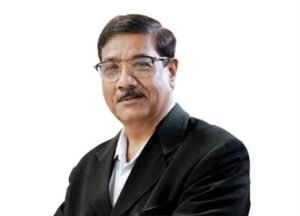
Universities must move beyond teaching sustainability as a classroom subject and turn their campuses into living laboratories where students can see, practise and measure change, Dr Sunil Rai said at the 5th Yuva Sustainability Conference, held online on 12 August 2026 to mark International Youth Day 2026. The conference, themed ‘Mainstreaming Sustainability in the Education Ecosystem’, was organised by Voices of Bharat: Yuva for Sustainability, an initiative of Sustainability Karma.
For Rai, sustainability is not a programme, a timetable entry or a curriculum add-on. At UPES, he said, it is treated as a way of life – beginning with small acts such as switching off lights in empty rooms and extending to administration, teaching, research and institutional projects.
“Learning happens more by doing. Learning happens by seeing demonstrations and success stories,” Rai said. “Therefore, universities should become laboratories themselves.”
He pointed to rainwater harvesting as one example. Across UPES’s two campuses, Rai said, seven collection and recharge points channel rainwater into the ground, while the water table is measured weekly at three locations. When the university began operations in the area in 2003, the water table was more than 150 feet below ground; it now stands at roughly 64 feet, he said. The improvement was particularly significant on a hilly, sloping site where water would otherwise run off quickly.
The university currently generates about 20 per cent of the electricity it consumes through solar power and aims to raise that share to around 35 per cent within two years, according to Rai. UPES has also undergone a carbon audit and set a reduction target for 2030, he said.
That campus-level effort rests on a simple message: consume only what is needed and do not waste. Rai illustrated it with what he called the Indian ‘B2B generation’ – bedsheet to pocha. A bedsheet might become a curtain, tablecloth, bag and finally a floor-cleaning cloth, remaining in use for more than 20 years.
The example, he argued, captures a reuse ethic embedded in Indian households long before the circular economy became a formal policy idea. It also exposes a tension: consumption may drive growth, but gross domestic product has to be weighed against environmental cost.
Rai grouped the university’s agenda into three areas: campus life, research and large-scale partnerships. Together, they make conservation visible, steer researchers towards usable solutions rather than publication alone, and connect university expertise with governments on projects designed for public impact.
Nearly 60 per cent of UPES faculty members are involved in sustainability-linked projects, Rai said. One team aims to extend electric-vehicle range from roughly 200 kilometres to 300 kilometres and cut charging time from about 45 minutes to 20 minutes. Other projects span biomass fuels, carbon sequestration and hydrogen absorption.
The emphasis is on applied research that moves towards deployment and commercial use. UPES is incubating about six companies, Rai said, including one working on capturing carbon from blast-furnace emissions.
Rai also described efforts to revive rivers in Uttarakhand. He said many local rivers flow only during rainfall and dry within hours. Faculty teams are examining check dams and riverbank treatment to retain water for longer. On the Tons River, the return of parrots and other birds offered an early sign of recovery, he said.
Another project is studying the Yamuna’s microbial richness. Teams are collecting water samples about every 10 kilometres between Yamunotri and Paonta Sahib to identify where beneficial microbes decline. Rai said the longer-term plan is to culture depleted microbes in university laboratories and work with the Uttarakhand government and incubated companies on restoration.
The larger lesson, Rai said, is that Indian institutions must treat local environmental problems as their own and develop solutions suited to their context instead of simply measuring themselves against the West. Young people, he argued, must lead that shift voluntarily rather than waiting for sustainability to be imposed through policy or regulation.